1. Yoga – It’s Not For Everyone, But It Just Might Be For You

    February 24, 2014

    Yoga – It’s Not For Everyone

    by Michelle Blessing


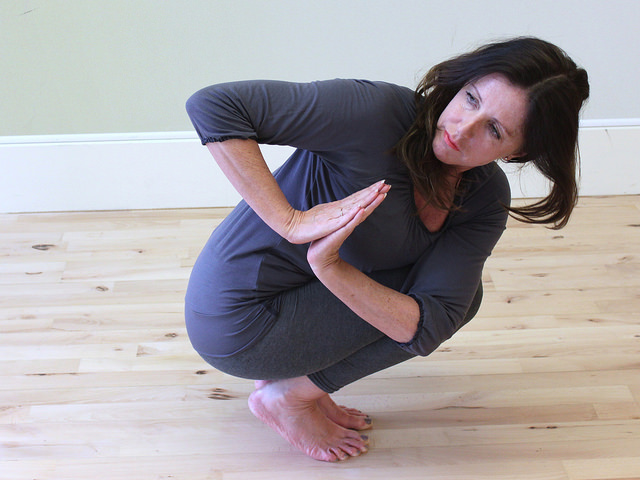
    My journey into the world of yoga didn’t exactly start out in a typical fashion.  Sure, I’d been curious about it for a few months, went out and bought the necessary “equipment” and an instructional video, and then – nothing.  That’s not to say I didn’t try; it’s just when your children decide to use you for a human jungle gym as you’re in downward dog, it just doesn’t really work out.


    So I forgot about it for a few week, until I stumbled upon a yoga deal on a website I frequent.  It was in my area and offered half-price sessions.  I thought, “Why not?” and bought it.  So it became official – I was going to yoga class.  I’d never been to an “exercise” class before, so I enlisted in a friend who was already practicing yoga to come with me and check it out.


    I went to class that night with a sense of excitement and anxiety – could I handle the heat (it was a hot yoga class, by the way)?  Would I fall over and make a fool of myself?  Would I be able to move tomorrow?  Would it relax my worried mind enough to get a good night’s sleep?  The answer to those questions, ALL those questions, is a resounding yes (well, I didn’t exactly fall, but I lost my balance A LOT).   The class was everything I expected and more.  The instructor was friendly and happy to have new faces in front of him.  My aching back felt better after the hour-long class, and for once in my life (at least for an hour), I stopped being so anxious about life.


    Let me explain what it was like for me during that first class.  After my initial nervousness passed and I allowed myself to fully engage in the class, I felt a sense of peace and enlightenment wash over me.  It was as if every cliché about yoga I’d ever heard was true – I was able to relax, focus on myself and get in tune with what my body (and mind) needed.  I left class with a spring in my step and joy in my heart.  I couldn’t wait to go back and do it again.


    More importantly for me, however, was the sense of peace I felt (and continue to feel) during and after yoga class.  As I set my intention for class each time – which usually centers on reducing my anxiety and finding inner peace – I feel a sense of control over the worries in my life.  During class, I keep my focus on ME – on my form, on the poses, on what my instructor is saying, on the music, essentially, I keep the focus on anything but what I am currently worrying about.  And as I flow through the poses, I can actually sometimes feel the anxiety literally leaving my body.  I start to relax, and I find by the time we reach the final pose of the day – savasana – I am left with that sense of peace I so desperately crave on a daily basis.


    So, how will you know if yoga is for you?  Well, you certainly won’t know unless you try it, but I’m not telling you to go spend a fortune on yoga gear only to find you really aren’t that into it.  Because, truth be told, yoga isn’t for everyone, but it just might be for you.  Think about what you want to get out of your practice – this is likely going to be different depending on whom you talk to.  If you are looking for a more intense (not that yoga can’t be intense) workout, or if you want to focus more on the physical aspect of working out, then yoga might not be for you.  But if you are looking to gain strength and flexibility of body, mind and spirit, then I suggest you give it a try.  This is especially true if you are prone to worry, anxiety, depression, insomnia….yoga is likely going to give you relief from these ailments.


    Since I’ve started practicing yoga, I can’t say all my worry is gone, but I know when I roll up my mat and leave that class, I feel calm and ready to face my worries.  Yoga gives me the sense of power over my life I have been missing for so many years.  It puts me in touch with not only the strength I currently possess, but it shows me the potential strength I have to develop.  I’m not saying it saved my life, but it definitely gave my life the push to the path I needed to follow.

    Image Credit: http://www.flickr.com/photos/yogamama-co-uk/5445768199


  2. The Burn-Out Syndrome: the Consequences and Tolls of an Unbalanced Life

    February 22, 2014

    The Burn-Out Syndrome and Unbalanced Life

    Ever heard of the Burn-out syndrome? It’s a very common set of symptoms that derives mostly from extreme dedication to work or others, especially in health and social related professions like doctors, nurses, social workers and therapists. It seems that the more devoted you are to your work, the more it costs you. Find out more about this heavy-burden syndrome and its tolls on people’s lives.

    Am I burned-out? Here are some of the signs:

    1. Long hours of work. Do you work more than you should? Do you feel guilty when you leave work and go home thinking about work? Can’t stop and disconnect the work button in your head? Can’t remember when was the last time you went out to dinner or had friends over?
    2. Unhealthy habits. Have you quit doing exercise? Do you sleep 3-4 hours a night? Are you abusing alcohol or prescription drugs to stay awake and alert? Do you often skip meals and take more than 3 cups of coffee a day?
    3. Irregular behavior. Do people around you complain about your mood swings? Are you constantly irritated about everything and everyone? Do you often yell at people for no reason? Or can’t stand to be around people? Do you feel like you’re taking it out on your family, your kids?
    4. Psychological symptoms. Are you experiencing anxiety attacks? Feeling too stressed to even think straight? Can’t sleep or have too many dreams? Have migraines? Lost sexual thrive? Do you cry for no reason or because people around you don’t understand your obsession about work?
    5. A general feeling of being overwhelmed. Feeling like there’s too much to do and so little time? And do you have the idea you’re the only that can get the job right?
    6. Feeling like your life is empty and devoid of purpose.  Can’t enjoy the work you loved so much anymore? Can’t feel pleasure about anything in your life? Does it annoy you to be around friends and family? Are you contemplating suicide to end your misery?

    You might be experiencing a burn-out syndrome. Ultimately, pursuing life like this will make you end up in a hospital or worse. But there’s still time to regain your life back and live it in a balanced way.

    Why did this happen?

    There are several reasons why people experience burn-out syndrome and it’s not just because of work. It might also be because you’re taking care of a sick and dependent loved one and don’t take enough good care of yourself. But here are some of the most common reasons:

    1. Probably because you’re a great professional and extremely devoted to your work. Which is no excuse to have no life outside work!
    2. You take too much care of everyone else around you. Are you the one everyone leans on? Are you the one everyone calls and you always go to the rescue? When do you let others take care of you?
    3. You think you have super-powers. And you can do anything – work, take care of your family, be there for friends, clean your house, do community work, you name it. My question is: can you do all of these things right? Or are you just mending things?

    What happens if I keep on going?

    These are just some of the examples of what might happen, if you do not become aware of what the burn-out syndrome is doing to you and your family.

    –          Divorce

    –          Substance abuse

    –          Alienation from your children (You’ll be the parent that forgets to pick up your kids or to even phone them on their birthday)

    –          Loneliness (You’ll have no time for your friends or to make new ones)

    –          Develop serious physical illnesses (too much stress causes real physical illnesses and your immune system is down so “opportunistic  virus” can attack you)

    –          High suicide risk (your life seems to have no purpose or meaning and you might start to wonder why you’re even here)

    What can I do to stop it?

    1. Seek professional help. That’s my first advice. It’s really hard to quit life habits you’ve probably have had for years and you might need some medication at first.
    2. Take care of yourself first. You can’t be there for others if you’re not feeling so great about yourself. And also, let others take care of you once in a while.
    3. Divide your day in 3. Some monks believe that in order to live a balanced life you should have 8 hours of sleep, 8 hours of work and 8 hours of leisure. Seems impossible?
    4. Learn to say no. Is it too much? Just say no. The world won’t fall apart if you leave some work for tomorrow.
    5. Have healthy habits. Like doing sport at least 2 times a week, eating all daily meals and being around friends.

    Image Credit: http://www.flickr.com/photos/alyssafilmmaker/4029064544


  3. Facing my Anxiety and Making Difficult Decisions

    February 20, 2014

    Facing my Anxiety and Making Difficult Decision

    by Audrey  Hollingshead


    3AM. My husband was sleeping soundly beside me while I lay awake. I wanted to sleep more than anything but couldn’t seem to do it. It was like I had drank twelve cups of coffee when I haven’t had a drop of regular in years. My hands shook as I puttered around my iPhone listlessly, hating that I’d be spending the next day at work with keyed up nerves. Why was this happening to me? What was going in my life that was making sleep nothing but a dream?

    If this sounds a little too familiar you might be one of the millions of anxiety sufferers losing sleep today. Like pain, sleeplessness and numerous other anxiety symptoms are often a sign that something is up. Unlike pain, however, the “up” doesn’t always have to be physical. It could be almost anything. But some psychologists believe that prolonged anxiety and depression are caused by a subconscious dissatisfaction of life. Weather you know it or not, something is not working out like you had hoped. So, how can you fix this?

    First, Take a deep breath. Deep breathing can lessen the feelings of panic and help make this process easier.

    Second, you have to look into yourself and ask a lot of important questions. Is this what I expected my job to be like? Am I really happy with my spouse or partner? Is there a sad anniversary coming up that I’m forgetting? This may take a long time, or no time, but it is always important to do.

    (more…)


  4. How Would You Define a Positive Peace?

    February 20, 2014

    How Would You Define a Positive Peace?

    by Sue Chehrenegar


    Every year, I try to get to one special breakfast, one that is always held on the morning of April 29th. The group that hosts that special event provides those attending with the chance to enjoy a beautiful spread. That spread is laid-out in the kitchen and dining area of a building that is just blocks from where I live. Therefore, I can simply walk to that building, and I have a great excuse for eating as much as I want.

    Of course, this article is not meant to focus on the food that is served that day. This year, I enjoyed two particular aspects of that annual event. First, for some reason, a bird chose to start singing as we were eating our breakfast. That was a real treat, because the historical occasion that had brought us together was associated with chirping birds. It took place in a garden, a garden outside of Bagdad.

    From now on, I will always link that garden to this phrase: positive peace. That is a term that I heard the morning that I listened to the birds chirping. I heard it from a friend, a woman who had been attending a series of talks, talks that were given in the same building.

    According to her, one of the speakers, a professor at UCLA had spoken about the value in considering the meaning of a positive peace. He indicated that it differed from a peaceful interlude, a time when there was no fighting and no thought of initiating such an action. At such a time, people might enjoy the peaceful nature of the existing situation, but none of them had chosen to follow the path that promises to transform a peaceful interlude into a time when any thought of violence has been wiped from the mind.

    During such a period, the general population would think that any violent act seemed totally meaningless. There would seem to be no reason for acting violently. Such actions would not be viewed as a means for reaching an acceptable goal.

    I see a positive peace as being a time when the world has come to understand the benefits attached to consultation. During a true consultation, no one who sits at the table tries to claim any idea as his or her own. Rather, each person puts-forward an idea and lets the others use it as a foundation, one on which a plan can be built.

    When a plan has been formed following a consultation, no one person can take credit for its success. By the same token, no one person can be blamed, if the plan does not succeed in accomplishing the desired end. A failure should not invite fighting, but instead it should encourage further consultation.

    During a positive peace, people would consult about how to solve problems. As they consulted, there would be no finger-pointing. After the consultation had ended, no one would start back biting. No one would try to gossip about what had been said by someone else, during the consultative process.

    In my mind, political parties would seem out-of-place in a world where peacefulness had taken-on a new meaning, one that meant more than just the absence of violence. After all, loyalty to one party would suggest a dislike for the other party. Obviously, a willingness to show a dislike could be seen as an act that could not be used to ensure maintenance of a peaceful situation.

    I did not hear the talk about a positive peace, but I have no difficulty forming my own ideas about what should be the principle characteristics of a world that has arrived at such a state. It seems to me that anyone who has chosen to work towards achievement of such a state has certainly chosen to have a meaningful life. Those who have chosen a different path may find out too late that their violent actions have managed to rob their life of meaning.


    Image Credit: https://www.flickr.com/photos/defenceimages/6150625532


  5. Laughter as the Best Health Therapy

    February 16, 2014

    Laughter as the Best Health Therapy

    by Melisa Marzett

    Laughing is a perfect way to reduce or even relieve stress in our lives. It can help you to cope with a stressful lifestyle. It releases anxiety and changes your mood, but if you think that it change stressors, you’ll be disappointed. It’s not so. It changes only how we relate to that stressors. The idea of this theory is quite easy –we laugh more, so we stress less.

    Laughter binds people together and increases intimacy between them and simply makes happier. Specialists points out, that laughing makes also good physical changes in our body. It makes your immune system stronger, it diminishes your pain and protect you from negative emotions, stresses and depression.

    Today the life rhythm tends us to stop laughing, we stop doing anything emotional. Our laughter can be described as a natural and essential way of taking care of ourselves. The nature itself gave us the laughter so we can heal our minds and bodies. Some people just haven’t realized its importance in their lives.

    Nowadays people are mostly media-educated and they know a lot of information about depression. But mainly we use drugs, medicines, of even highly recommended shock treatment. But if you want some natural solution, if you don’t want to medicate your body with antidepressants this technique is for you.

    Laughing releases your anger. If you keep it inside, you become sick and nervous. Laughter will not change your problems, it can only change you so you can cope with them. It dissolves harmful emotions because you simply can’t feel anxious, sad or angry when you laugh. It helps you to relax, because it increases your energy and reduces stress. It allows you to see situations in a positive way, making a psychological distance between you and world’s negative.

    You must understand that it’s ok to feel as good as you can. It’s your life so why must you worry about the others’ opinion. Take it easy. You should cultivate the ability to take the life in a spirit of play. Just imagine that all that gloomy,serious and heavy things are dragging you down at the very bottom of the depression. Do you really want it?

    If somebody seeks out the humor in everyday life, he’ll find that. And also the other important fact that we are searching namely for positive people. Nobody will like uninspiring or moody person. And if you’re alone, it’s harder to cope, there’s nobody who can support you. But first you must change yourself. Try to encourage yourself by watching funny movies and TV programs. If you simply don’t find that funny and you can’t laugh, just fake it! Make sounds of laughter and move your body as you laugh. There’s no doubt that your mood will change.

    If you think that that’s stupid, mat be you can try Laughter Yoga. It includes four things: clapping in rhythm, breathing, stretching and laughter exercises. In this case laughter comes from your body, not mind. When you take part in such a workshop you get the release of endorphins and then you feel yourself much better.  This technique also keeps you fit. You get exercise, which tones your muscles and improves your breath.

    In the end, we’d like to offer you several tips according to this theme:

    1. Try to laugh for 5-10 minutes every morning.

    2. Seek out the humor in serious situations, even if it’s hard.

    3. Smile more, watch comedies, read funny stories.

    4. Surround yourself with flowers or with other things that can make you smile.

    5. Don’t stay home on weekends. Go to the cinema, meet your friends, sing, dance and enjoy your life!

    Image Credit: http://www.flickr.com/photos/boudewijnberends/6307186578/


  6. My Own Worst Enemy

    February 12, 2014

    My Own Worst Enemy

    by Michelle Blessing


    I want to be happy.  Not just content, but truly HAPPY.  And just when I think I have it figured out, it’s gone.  She takes it away again, leaving me broken and defeated.  Left to rebuild myself, I try again, only to once again almost reach the top of the happiness hill – and she pushes me back to the bottom.  I feel as if I will never win this battle.


    Who is she, you might be wondering?  Well, she is very simply put, ME.  I am my own worst enemy in the pursuit of happiness.  I find myself becoming content with the way life is going, finally settling into a pattern, and then I start to wonder – is this really it?  Have I reached the pinnacle of happiness?  My focus begins to drift, and I start to refocus my energy on the negative aspects of life, slipping back down the hill it took me so long to climb.


    This has been an ongoing battle for me for many, many years.  At one point, I decided I simply wasn’t meant to be happy; after all, not everyone can become a doctor or a lawyer, so why should everyone get to be happy?  Maybe I was meant to live a life of suffering and misery, while others enjoyed the people, places and things around them.


    And then I really started to think about it – what made those happy people different from me?  Why were they so jovial and free, while I was trapped in a prison of unhappiness?  I really didn’t have an answer, so I started doing some soul searching.  Why did their happiness seem so easy, so effortless, while mine seemed to be a full-time job?  And it was in that soul searching that I started to find the answers.


    First and foremost, happiness is not something we can force.  It is not something we can buy, nor is it something we should even strive for.  Let me explain that last part – because I’m sure many of you are scratching your head – I mean, are we supposed to strive for happiness?  Isn’t that what life is all about?


    Yes, it is, but the pursuit of happiness need not be specifically about happiness itself.  Because when it comes down to it, we all define happiness is different ways.  So to say we are striving to be happy has not just one, but also MANY, different meanings.  And that’s okay, but that means that we aren’t necessarily striving for happiness itself, but for the different situations that produce happiness.  Once I learned that happiness was not a quest per say but rather the end result of a journey, I found that what had eluded me for so long was suddenly right at my fingertips.


    So, what exactly did I do?  To start, I quit my 9 to 5 job and went back to school.  I started freelance writing and I spent more time with my kids and my family.  I know that is extreme, but you don’t have to overhaul your life to find true happiness.  Start small with something that you really, truly enjoy.  Take time each week to do that one simple thing.  It might be reading a chapter in a great book, taking a cooking or yoga class or making a telephone call to an old friend.  Whatever it is, you simply must do it.  As you start to make that part of your routine, add something else.  Keep adding enjoyable things to your life, slowly, until you feel that sense of contentment we all long for.  It might not come tomorrow, next week or even next month, but rest assured, as you continue to pursue the things in life you truly enjoy, it will.  After all, life is too short to be anything but happy.

    Image Credit: http://www.flickr.com/photos/viggum/3536424433


  7. 9 Ways to Treat Yourself On Valentine’s Week

    February 10, 2014

    9 Ways to Treat Yourself On Valentine's Week

    by Olga Serkus

    I just broke up with my boyfriend. Wrong time? You bet! I was so depressed that I ended up going to a shrink, whom I didn’t visit for 5 years. My therapist is a really nice lady and she recommended me… to find ways to spoil myself. I did. So, I wrote this post for those of us, who don’t have partners to share the joy of Valentine’s. I hope these simple recommendations will help you to fend off the Valentine’s Day Blues. For those of you with partners, hey you can still do this, or maybe it will be done for you by your Special One.

    Spoil Yourself! Depending on what you like, and what matters to you, there are almost endless ways to spoil yourself. The key here is to keep positive. Here are 9 ideas to get you started:

    1. It’s nasty winter weather for many of us right now, so how about doing something to warm yourself up and ‘cozify’ your life?  Buy yourself your favorite indulgent hot chocolate, or other hot drink, and break out the marshmallows, chocolate, whipped cream, whatever sumptuous toppings your heart desires.  Then snuggle up on the sofa with your favorite book or movie and sip, sip, sip.   Drink and repeat for added effectiveness!

    2. Take a spa break.  Men, this is for you too!  Choose a service that fits your budget and make the appointment this week!  It can be something as small as getting a pedicure, or you can step it up to a massage or facial.  You could even book a half or full day package if you’re feeling really flush.  Ultimately it doesn’t matter what service you choose, it’s the fact that you are spoiling yourself that matters!  And, deflect any Valentine’s talk with a joke or a smile. – who cares, right?

    3. Been abandoning your gym routine because of the cold?  Get back over there!  Set aside some time to have a leisurely workout — don’t overdo it if you have been AWOL for a while — and concentrate on all the good you’re doing your body.  Exercise, as I’m sure most of you know already, is a huge stress and depression buster, so the more you sweat, the better you feel!  Treat yourself when you get home to that decadent hot chocolate from tip #1, without the guilt!

    4. Buy your favorite food.  If you like to cook, set aside an evening when you really take the time to make your favorite food exactly as you like it, then savor each bite.  You can also wash it down with your favorite wine and light a couple of candles while you’re eating, just to set the mood.  Don’t cook?  No problem.  order your favorite take-out instead, or pick something up pre-prepared from a gourmet food store.

    5. Get your favorite movies!  We all have a couple of movies that just make us warm and fuzzy all over, at least for the couple of hours we spend in their company.  If you don’t already own your favorites, go buy them or rent them from Netflix.  Plan a special movie night for yourself, shut off the phone, dim the lights, maybe make your favorite food, or buy your favorite wine, put in those DVDs and sit back and relax — the hot chocolate could also come in handy here too, especially if you have more than a couple of favorite movies!

    6. Take a bath!  I mean a long, relaxing, bubble-filled, smells-wonderful-bath, not the quick, utilitarian kind.  If you don’t have some great bubble bath or aromatherapy oils, go find some.  There are so many out there with such varied prices that there’s bound to be something for everyone’s budget.  If you’re short on ideas, take a look at my Stress Relief Store, I have some of my favorites listed!  Once you’ve picked out your bath oils, if you have some spare cash left, why not pick up an aromatherapy candle?  These work wonders for soothing the soul and putting you into a deep state of relaxation.  Still not relaxed enough?  Do you have any of that wine left over from that fabulous dinner you cooked the other night?

    7. Splurge on a completely unnecessary but cute accessory.  It could be anything from a fun pair of mittens, to a pretty bracelet or pair of earrings.  You don’t have to break the bank – in fact, picking something small is sort of the point – you want to feel like you’re treating yourself, but not buying something that you’ll regret later.

    8. Download some new music.  Some people I know do this all of the time, but I bet most of you out there don’t.  If that’s the case, taking some time to explore some new music could be just the thing that you need to stave off the blues this Valentine’s Week.  Just try to stay away from the romantic ballads!

    9. Buy yourself some flowers!  So, what if other women are getting flowers from their partners this V Day?!  It doesn’t mean you can’t too.  If this is not something you usually do, head to a florist and spent some time breathing in the heavenly scents and admiring the pretty colors.  When you’re ready, snap up a bunch of your favorites and stick your nose in them immediately, then inhale deeply!  If you don’t have a nice vase to put them in, treat yourself to one of those too!


    Have fun!

    Author Bio: Olga Serkus is a graduate student in Psychology at the University of Toronto, a single mother, and a blogger.

    Image Credit: http://www.flickr.com/photos/jstar/526078304


  8. Benefits of Positive Attitude for Addiction Recovery

    February 8, 2014

    Benefits of Positive Attitude for Addiction Recovery

    by Emily Syane

    Recovering from any type of addiction, whether it’s drugs or alcohol, is a long process. An addict cannot simply change overnight, as the nature of addiction is that this is an impulse they cannot control. There have been many types of addiction treatments and therapies over the years and many are still in use today. However, all these treatments, therapies, and retreats would simply be useless if the addict himself simply is not interested in changing. A positive attitude is one of the most powerful weapons people looking to stop their addiction can have. A positive outlook allows them to carry on and stick to their treatments. While some people may think that this is all psychological mumbo-jumbo, a positive attitude towards one’s self, the treatment, and in general, the world, can make a big impact on treating addiction. Let’s take a look at the different ways such an outlook can benefit recovering addicts.

    Reduce Depression

    It’s common sense that if you have a positive attitude, you won’t be depressed, but for addicts, this can practically guarantee their recovery. People treating addicts have coined a term for people who are overly negative – “Stinking Thinking.” This can cause real, clinical depression, but is also very dangerous for people who are trying to get rid of an addiction. This happens when people are overly negative and become pessimistic about their future. This increases their chances of relapsing and even make people around them suffer. Even if they stop taking drugs or alcohol, they recovering addict might not be happy in sobriety and be driven to go back to old habits. And, when people are depressed, even the smallest things can set them off and send them back to the bottle.

    Boost Immune System

    Believe it or not, a positive attitude can actually boost the immune system. A study in the journal Psychosomatic Medicine showed that people who meditated and experienced happiness had a higher level of antibodies in their blood. This meant that people who had a positive attitude could potentially fight off infection better than those who do not.

    Positive Attitude

    Reduce Cardiovascular Disease

    Having a positive attitude can also have benefits to heart health. Various studies have shown that a positive attitude can generally benefit the body because this can lower the level of stress hormones and inflammations, which are good signs for better cardiovascular health.

    Increase Self Efficacy

    Self-efficacy, according to psychologists, is an individual’s belief that they have the ability to achieve their goal. Self-efficacy and positive thinking go hand-in-hand and help an individual achieve their goals. This means that people can reach their goals by simply thinking they can do it. Many people can help improve their self efficacy by accomplishing small goals, seeing other people achieve these goals, and even through therapy.

    Other Benefits…

    There are many other benefits people (in general) can get from simply having a more positive outlook on life. People who have a positive outlook are able to better handle stress and adversities in their lives. They can problem-solve and tend not to let the bad things that happen in their lives to bring them down. They have more energy to do more things in their lives. A positive attitude can help people live longer, as they experience little stress and as mention earlier, have a better immune system. In general, people who have a positive attitude are happier and make those around them happier as well.

    Recovering from an addiction is not an easy road. It is often painful and a lot of hard work. However, many people all over the world recover from their addiction, and in many of those cases, a positive attitude was not only necessary, but pivotal. Having a positive attitude is one of the best ways to recover from an addiction. It has many benefits, but in general, it can help prevent relapses and make recovering live happier lives in sobriety.

    Image Credit: www.flickr.com/photos/jackheart/5188367113


  9. Suffering: a Necessary Pathway to Personal Growth?

    February 4, 2014

    Suffering and personal growth

    by Daniela Aneis

    When confronted with painful situations in our lives, we often ask ourselves why. “Why is there so much suffering in the world? Why do bad things happen to good people? What have I done to deserve such suffering? What is the point of all this?” But have you ever stopped and wondered you might be asking the wrong questions?

    Although the advent of Positive Psychology has swift the focus of Psychology from psychopathology to what it is that makes the human being extraordinary – by focusing on positive emotions, optimism, resilience, sense of humor and so on – Positive Psychology does not discard the incredible power of suffering and the experience of negative emotions. It’s not about avoiding pain and suffering, it’s about finding out what makes people thrive and achieve personal growth despite suffering like everyone else. Are these people special and extraordinary? Yes, but you can be as well.

    Yes, but why suffer at all?

    You will probably be asking this question by now. That’s got to do with today’s society paradigm. You should be happy all the time, you should be successful and enjoying life to the fullest, you should be surrounded by friends and family and never have any problems because everything is alright all the time! Doesn’t this strike you as a silly idea? Aren’t we allowed to have problems, to feel sad and depressed occasionally? It’s not a crime to experience negative emotions. It’s actually healthy as long as you process them and channel your negative emotions in a constructive way. And this will allow you to grow as a human being and enjoy life to the fullest.

    Does suffering have a point?

    Yes, it does. So, the real question you should be asking is: “Can I find meaning in my suffering?” Psychiatrist Viktor Frankl, who was himself a survivor of the Holocaust, defended in his Logotherapy theory that what we should be seeking for meaning in our lives, whether it is through what we do, who we love or the attitude we take over inevitable suffering.

    Do you know what happens when you ignore your feelings and emotions? You keep sweeping the “emotional dirt” under the rug, until when one day it blows into your face and you’re forced to deal with it. Do you know when this happens? Often when people get sick or seriously depressed or anxious to the point they can’t lead a normal life. Emotional baggage will drag you down.

    How to deal with suffering in a constructive way:

    1. Take responsibility. Most of happens in your life, doesn’t just happen to you. It is a product of the choices you’ve made in life. So ask yourself this, how much percentage of everything that happens to you is your responsibility? Got your number? Good, let’s work on that and ignore what’s not yours.
    2. Deal with emotions. All (!) emotions. Feel sad, cry, yell, feel angry at the world, feel hopeful or happy, but don’t stop feeling. There are no good or bad emotions, just necessary ones. If a loved one passes away, aren’t you going to feel sad for as long as you need to heal from your loss?
    3. Don’t let others bully your emotions. Don’t feel guilty about it. If everyone else around you has bought the slogan “happiness is the way”, that doesn’t mean you can’t feel differently about it. Take time to heal. And then go out there again and face the world.
    4. Take action. Have you processed your emotions? Do you know now why you felt them? Can you change anything about it? Now is the time to take action. Search for a new job, go out and meet new people, try a new activity or sport.
    5. Let go of what you can’t fix. Is it a solvable or unsolvable problem? If the answer is unsolvable, then it already has a solution to it. And if you can’t fix it, let it go. Move on to something you can actually control and manage.

    By now you should have your answer, but if you still need a straight one, here it goes: Yes, suffering is a necessary pathway to personal growth. But it is your choice how to deal with your suffering. So tell me, is the glass half full or half empty?

    Image Credit: http://www.flickr.com/photos/jstar/3185994119