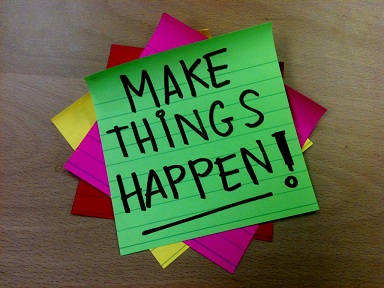
1. Celebrating Stress Awareness Month by Mastering the Art of Positive Thinking

    April 24, 2013

    Positive thinking

    Image Credit: Wagner Cesar Munhoz

    by Melissa Page

    April 1 marks the beginning of the National Stress Awareness Month, which was designated since April 1992. What better time to engage in stress-relieving steps for a happier and healthier life than today?

    Articles on managing, if not relieving, stress has gained a great deal of attention in the recent years. From what we’ve heard and read, positive thinking (aside from relaxation and coping techniques) has proven to be helpful in decreasing a person’s stress levels.

    What is positive thinking?

    Positive thinking is an attitude that makes you face life’s challenges with a positive outlook. It doesn’t necessarily mean ignoring the bad ones; instead, its about approaching stressful events in a more positive light.

    You may have heard the question Is the glass half empty, or half full? a hundred times. It may sound ordinary, but your answer to that question actually illustrates your general outlook in life.

    If you answer the second option, you’re on the right track. Why?

    Benefits of thinking positively

    According to the Mayo Clinic, positive thinking is more than just a stress buster – it eventually leads to a drastic improvement of one’s health. Researchers have found that a person who thinks positively is most likely to have an increased lifespan, decreased depression rate, greater resistance to the common cold, better psychological well-being, reduction of death through cardiovascular disease, and better coping skills.

    Ways to promote positive thinking

    1. Avoid negative self talk.

    Does your inner voice focus on negative thoughts? Do you mentally tell yourself you’re no good? Try to take a moment to stop and assess what you tell yourself.

    If your thoughts center on negative ideas, turn that negative self-talk to positive self-talk instead. Replace your negative statements with milder wording. For instance, instead of saying “hate,” say “don’t like.” Sounds less negative, right?

    2. Develop a list of affirmations.

    Do you think your life is a mess and you are a failure? To overcome this negative feeling, developing a list of affirmations may help. Positive affirmations help you reprogram your thinking and gives you positive attitudes and thoughts to promote self confidence.

    Affirmations such as “I finish my job with ease” or “I see challenges as an opportunity to grow” are good examples. List them down and read them to yourself at least twice a day!

    3. Surround yourself with positive people.

    As the adage goes, “Tell me who your friends are and I’ll tell you who you are.” More often than not, the people we mingle and stay close to have influence on us. How your friends react will eventually be the way you react as well.

    It helps to be with people who think positively. When you are together, you get to learn and follow their type of thinking in response to different situations. If you stay with negative-minded people, your habit of negative self-talk will be difficult to change.

    4. Smile and laugh often.

    A real, genuine smile can help change how you see things in life. Although it can be really difficult, it is important to stay open to laughter, humor, and lightness. Sometimes, when you see potential humor in a situation, you tend to reduce stress and lighten your mood.

    So next time you’re under a cloud, try watching something funny online or read a joke you always crack up to. Smiling and laughing helps you psychologically and physically, too!

    5. Cultivate optimism.

    Even if you are an optimist since birth, positive thinking needs effort. Staying optimistic is like strengthening a muscle –  the more you use it, the stronger it will become. When you start to engage in negative thinking, don’t hesitate to ask help and encouragement from friends and family.

    Are you now ready to enjoy greater happiness, health benefits and well being? Start thinking positive!


  2. On Psychological Benefits of Meditation

    April 22, 2013

    benefits of meditation

    Image Credit: Lululemon Athletica

    In the world we live in we value goals and getting the best results. It therefore might look like a paradox that people turn to meditation. Sitting in silence is not very productive one might think. But is this true? Do benefits of meditation compensate the value of time you lost sitting? Absolutely! Your mental health and well-being are priceless. We live to be happy and meditation is the path to happiness. Let’s have a look at some known meditation benefits.

    Better control and concentration

    Concentration is important to make the most out of your day at work. It allows you to do more in less time and use your time more efficiently. The Power of focus increases when you meditate regularly. The new found focus can be used for meditation but also for all other activities that ask for concentration like sports, making music or a day at work. When you have negative thoughts often or think you cannot control your own thoughts, meditation can very well be beneficial to you. It teaches you to control negative thoughts that arise and even stop them entirely. An unruly mind can come under control through meditation, which will create more peace of mind and enable you to achieve your goals. When you get irritated easily by situations you cannot control the solution is not to avoid these situations but to take distance from it. Everybody needs to wait in line sometimes, nobody likes a train delay but you cannot help it that these occasions occur. The solution to these problems is to detach yourself from these situations in your mind. You need to try to see things in the right perspective. A great benefit of meditation is that you’ll be better able to detach from unfortunate circumstances and the negative thoughts they cause.

    Improve your health

    Many studies have proven that meditation has health benefits. For example, when you feel less stressed you are a lot less likely to develop heart disease. Meditation teaches you to switch off from negative thought patterns and worries. By spending 15 minutes a day you will calm your mind and feel more relaxed overall. Our society is getting more and more aware of the link between physical health and our state of mind. Inner turmoil is often the reason for physical ailments. Because meditation stills the mind it can be a great step to avoid stress related ailments.

    Happiness and creativity

    It is fair to say that everybody seeks happiness. Happiness can be found in your own mind but if there is no peace of mind you will constantly be under attack from negative thoughts, no matter how successful you are. The act of stillness and simply being will create a happier self. An unexpected source of happiness arises when you meditate. In other words, happiness does not only depend on outer circumstances but your inner attitude is much more important. Your thinking mind often worries about the future or the past and sometimes even both. This takes out a lot of energy that covers up your creativity and spontaneity. Maybe you think you have no spontaneity or creativity but you have more potential than you think. We need a quiet mind to access these sources of inspiration. Your creative potential can be unlocked by living in the present moment.

    Find your purpose in life

    If you want to know more about the point of your existence in life, meditation can help greatly. Most of us look for external events and people to learn about themselves. When you really want to know more about yourself however, a journey inwards is also needed. Meditation provides us with a better understanding of ourselves and thus a greater understanding of life itself. New and neutral perspectives on life will be unleashed without our egoistic perspective. The answer ‘who am I’ can be answered by doing meditation.

    The first few attempts of meditation will not get you there. Meditation takes consistency and perseverance as it takes time to tame the mind. Reading about meditation alone is not enough. You really need to experience it to get a deeper feel for it. Therefore: give meditation a try because the benefits are plenty!


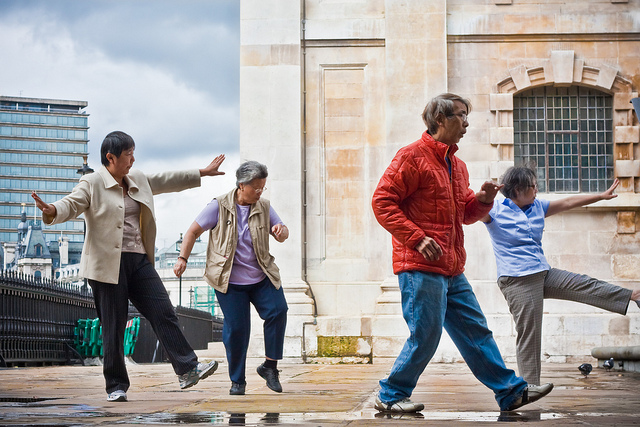
  3. The Psychological Benefits of Tai Chi and Qigong Practice

    April 21, 2013

    Tai Chi

    Image Credit: Garry Knight

    by Dan Kleiman

    The evidence is in that slow movement, coupled with body awareness not only has astounding health benefits but amazing psychological benefits as well. Recently, the Los Angeles Times published a story about the widespread use of slow movement , awareness-based therapies, for the treatment of pain brought on by “…cancer and cancer treatments, rheumatoid arthritis, fibromyalgia, multiple sclerosis and other diseases and conditions, in pain clinics and integrative medicine centers. These treatment plans include such routines as Tai Chi and Hatha Yoga.

    One of the main reasons that programs such as Tai Chi, Qigong and Yoga are so effective in managing pain is that the exercises help to relieve the depression often caused by chronic pain, greatly improving the quality of life. Continued practice not only keeps depression at bay but also improves confidence. In the above-mentioned study patients with chronic low back pain took a 12 week course of Hatha Yoga had significantly less problems with depression and disability than the standard care control group did. The same study using Tai Chi in treating the symptoms of rheumatoid arthritis reported less pain, stress and a much greater awareness of their body and more confidence.

    Medical experts are divided as to why these treatments are so effective. The most common consensus among researchers however is that the exercises encourage parasympathetic relaxation responses that reduce the stress response, inhibit inflammation, promotes immune functions and stimulates healing. They believe that the slow, deliberate movements extend the benefits of cardiovascular exercise to a much deeper level, drawing on previously untapped resources.

    The graceful, choreographed movement sequences of Tai Chi, called the “solo form” begin the process of merging mind, body and spirit. While learning solo form Tai Chi, students learn to feel different internal qualities and their outward manifestations. These different “energies” are called the 13 Postures of Tai Chi. As you perfect the 13 Postures, you are better able to relax: you sink your energy, lengthen the spine, relax the joints and muscles and calm the mind.

    When combined with appropriate breathing exercises, in which the breath is in harmony with the movements, the internal musculature of the shoulders, lower back and legs will open , with each breath taken. This promotes stillness, sensitizes the mind to both internal and external perceptions, suppresses jagged, hurried thought processes and raises the spirit.

    Later on, students more to two-person exercises called Push Hands. In Push Hands, you engage in extension and retraction movements in response to another person. You learn to neutralize your fight or flight response by grounding the other person’s force, in a gradual, non-threatening, systematic progression of exercises.

    In this video, you can see how our typical response is to either tense up or run away when we are faced with a threat: http://youtu.be/dbt1nC9jypI

    Tai Chi trains you to respond in a completely different way. You learn to “sink your chi”, staying grounded, present, and connected to the reality of the situation when you are faced with a mental, emotional, or physical challenge.

    In Tai Chi Push Hands, you learn that forcing a situation to resolve in a pre-determined way won’t work. Instead, you have to go into each encounter “grounded” and “listening”, or engaged and with an open mind. The big difference with Tai Chi, though, is that you do practices that help you learn this idea in your body. It’s not just something you tell yourself.

    Where your solo form practice helps begin the healing process by gradually eliminating chronic pain, stiffness and/or depression, interactive practices allow you to go deeper into the psychological dimensions of your relationships with people all around you.

    Push Hands exercises also address problems with visual perception and balance, by introducing resistance, reaction time, and sensitivity to outside factors. There are currently many studies, and more being currently conducted, that illustrate the many health benefits, both physical and psychological that students of Tai Chi, Qigong, and Yoga receive. These exercises have been shown to not only be great for preventing illness and promoting psychological well-being, but more and more medical professionals are exploring ways to integrate these traditional practices into treatment programs for their patients.


  4. The #1 Necessity For A Satisfied Life

    April 19, 2013

    Field of Life

    Image Credit: Paul Esson

    by Don Sturgill

    Sigmund Freud’s pioneering work in psychoanalysis was based on the idea that human beings are primarily motivated by the desire for pleasure.

    Freud’s contemporary, Alfred Adler, argued that pleasure isn’t the root of motivation at all—power is what we really seek.

    Then came the horrors of the Nazi concentration camps and a perspective born from the depths of adversity: Life is never made unbearable by circumstances, said Viktor Frankl, but only by lack of meaning and purpose.

    The one thing necessary

    Our most important need, argued Frankl, is not to please ourselves or to rule over others, but to uncover the true meaning of life—to know why we live and what we should do. And the path to discovering that meaning is to listen to what life is asking of us.

    Both pleasure and power lose their grip when one discovers a “reason why.”

    To his Nazi captors, Viktor Frankl was known only as Prisoner #119104. To those who suffered with him in the concentration camps, though, he was a steady source of encouragement and a reassuring voice of wisdom.

    Many of Frankl’s fellow prisoners harbored bitterness and hatred against those who had imprisoned them for the “crime” of being Jews. But Viktor Frankl decided early on to keep his mind off the daily struggles of his untenable situation. Rather, Frankl endeavored to treat his plight as an “interesting psycho-scientific experiment.”

    He determined to view himself, not as an unfortunate victim of circumstance, but as a doctor with a front-row seat to events most people would only hear about after the fact. He was a participant in something incredible and significant.

    How to tell when someone will soon be dead

    “Why is it,” Frankl asked himself, “that one person perseveres and makes it through—despite the indignation and brutality—when a stronger and younger person may not?”

    By observing his fellow prisoners closely, he discovered how to predict who would be the next to die. None of the men were the picture of physical wellness; they all lived hungry and tired—yet there was one thing that distinguished those who would die from those who would live. Frankl saw a common factor emerge in the mindset of the doomed: They abandoned hope and gave in to despair.

    The will to meaning

    In Man’s Search for Meaning, the book he later wrote to chronicle his experiences in the concentration camps, Frankl made a poignant pronouncement:

    In the final analysis, everything can be taken from us—everything—but for one thing … we always retain the right to choose what we think about what is happening. We can never be forced to relinquish the most precious possession of all—our own mental attitude.

    The person who is able to find meaning in life—the person who sees obstacles as an inevitable part of life rather than as an end to life—is able to transcend even the most difficult circumstance to find a reason to go on living.

    Agreeing with an earlier maxim of Fredrich Nietzsche, Frankl wrote, “Those who have a why to live, can bear with almost any how.”

    An attitude of survival

    The original (German) title of Man’s Search For Meaning was Trotzdem ja zum Leben sagen, or “Still say Yes to Life.” When we say “Yes” to life, in spite of what life brings, we affirm that life is worth living, and we affirm that—in the end—the meaning of life trumps the tragedy of life.

    To lose hope is to deny meaning. It is to say the opposite—that life is not worth living—and, according to Frankl’s observations, those who maintain that line of thought are treading a sure path to an early death.

    What about you and me? Are we strong enough to reach down and hold on to the best of life, even during those black times when the worst of life is our portion?

    Trouble comes to all. Struggles come to all. It is our response, rather than the situation, that determines both our present and our future.

    By holding on to meaning, Frankl found a way to benefit from the unthinkable, to make sweet wine from sour grapes and to grow stronger through adversity.

    What is your “Reason why”? What is your “Yes” to life?

    If we don’t know and remember our answers to those questions, we may be hard-pressed to keep going when life seems cruel and unfair.

    And it will. For all of us.


  5. How Education Contributes To Quality Of Life

    April 17, 2013

    high education

    Image Credit: Ralph Daily

    by Diksha Singh

    How does one define ‘quality of life’? Generally, it is an indication of the well-being enjoyed within a society and its people. Sometimes, the term is equated with ‘standard of living’. However, the standard of living is measured in terms of employment and status while quality of life is measured in terms of education, human rights, recreation, mental health, physical heal and other factors.

    Education tops the list. Why?

    Education is not about learning alphabet, abacus and science. It’s not about academia, it goes beyond pedagogy. It is a tool, a resourceful tool that teaches us to be ‘humans’. It is our forever valid passport to the world. A good education may give you a job but intrinsic education teaches you about creating a quality of life, teaches you to create opportunities and engage in self-development.

    How Education Improves our Quality of Life?

    Makes us resourceful.

    When we are resourceful, we have better problem solving skills and these skills help us immensely when we leave the cocooned world of parental tutelage and academic learning.

    Makes us trans-cultural.

    Education is not restricted to any culture and neither does education changes with different culture. Education means knowledge and it is universal. It teaches us to be appreciative of varied cultures, enrich our own culture and enlighten our minds. Education improves our tolerance level and makes us trans-cultural. It tells us that every culture has the right to survive and live in this world; one should be open minded and not narrow minded.

    Education gives us survival.

    The moot point of economic survival in this world rests on money. Education equips up to earn money when we leave academic learning and begin the real journey of life. The chances of someone getting hired and promoted is more with an educated person and not with an uneducated one. After recession, an educated person has a higher chance of getting employed again than the uneducated counterpart.

    Of course, to argue, you can say that Bill Gates is a college dropout and look where he is today. I would say that education is not limited to degrees and rote learning, never. Bill Gates used knowledge, resourcefulness and survival skills endowed via education to reach top position.

    For Healthy  Lifestyle.

    In a global scenario plagued with health problems, certain researches suggest that people who have graduate and post graduate education are less likely to suffer from dementia and Alzheimer’s disease. While the scientific basis of this claim is not yet proven, medical people believe in this. A better health means an improvement in the quality of life.

    It Enlightens us.

    One of the basic facets of measuring quality of life is knowledge and humans gain knowledge via education. Knowledge is enlightening and thus, education plays a prime role in this enlightenment. Knowledge begets knowledge. There is no end to self-improvement. A knowledgeable person is revered and respected. Knowledge is universal and omnipotent.

    Education trumps all! It is a significant contributor towards improving our quality of life.

    For a child, education begins from home and then continues in a school setting. The academic years in the life of any child is formative and should never be compromised. More than academic learning, education teaches the child to observe, understand and comprehend. It teaches to act sanely, makes the learner resourceful, helps to develop skills and learn more about the thing called ‘life’ so that when the child grows up, he/she uses the education to build a better quality of life.


  6. Beyond 100: What We Can Learn from People Who Pass the Century Mark

    April 15, 2013

    Beyond 100: What We Can Learn from People who Pass the Century Mark
    Source: Beyond 100: What We Can Learn from People who Pass the Century Mark


  7. How to Keep Active in Your Older Age

    April 3, 2013

    Image Credit: Garrette

    We all know how important it is to stay active while the years pass. No matter how old we get it is the age we feel inside that counts the most. Having said that, it is still crucial to live up to that number as our brain’s functionality is directly related to our body health.  Keeping oneself free and active is one of the key points to staying healthy; so, here are some tips on how to keep active in your older age.

    Do not stop caring for the loved ones!

    Usually, as people get older the roles in the family change and the kids are the ones caring for the elderly. Those around us are the greatest source of energy; they are the ones who we would like to keep active for. Going out with friends and family is one of the primary things that should be done on regular bases in order to keep active while you age. And let’s admit it; it is not such a hard or unpleasant thing to do, is it?

    Well, that was a tip most of us follow without even knowing that it is a great step towards the active elderly hood.  Now let’s go on with more specific ones.

    Nutrition and Diet

    Oh, do not just scroll down through this part and think that diets are not for people of your age. Nowadays, most of us misunderstand the true meaning of the word “diet”; its primary purpose does not have to be losing weight. We are talking about eating healthy right now. Having healthy meals several times a day is something every one of us should have as a habit as it is crucial for the proper function of brain and body equally.

    As for exercising, it is not necessary to go to gym for hours or run tens of kilometers daily; going for a walk few times a week is a great substitute as well.

    Occupy Yourself!

    Retirement is not a reason to sit at home and ponder upon universal problems. Instead think about it positively; you no longer have to go to a job every day and have enough time to follow the hobbies you had back in the childhood. Whether it is painting, singing, crafting, gardening or any other hobby, revitalize it! The world is full of opportunities these days; your chance might be waiting just across the corner; all you have to do is continue striving for it.

    Embrace Your Age!

    Last but not least, have a look at the mirror and think of the ways in which the person looking back is beautiful and embrace it. Ageing does not mean that we no longer have the charm; it is all about how we show it. And after all it is always fun and uplifting to dress up and go out once in a while.


    Aid Yourself

    However hard you try, you may still have difficulties with mobility in older age. Having to rely on others is the last thing you want. So implementing mobility aids around the home will make things so much easier in the long run and make you self-sufficient in the years to come. This doesn’t always mean having bulky equipment dotted around the home. It can be simple things like if you are renovating a kitchen, then placing the cooker at eye level will mean better access than it being at floor level as strain on the back and knees will be less.

    If you or someone in your family has trouble getting up and down the stairs, then a stair lift may be the answer to making you or them feel and mobile again. Click here for a full range of stair lifts and home lifts.


  8. The Science of Getting Drunk

    April 2, 2013

    The Science of Getting Drunk
    Source:bestcollegesonline.org


  9. How discipline can change your life

    April 1, 2013

    marathon runners

    Image Credit: Marcos Vasconcelos

    by Lima Curtis

    Runners have a saying: “No one ever says, ‘Wow, I regret that run,’” but the same sentiment can be applied to every action in your life.

    It’s human nature that we are always trying to better ourselves, whether it is reading more, going to bed earlier, or simply drinking less coffee.  However, each of these decisions requires a certain amount of discipline, which if we lack, means we don’t do what we set out to do, and end up feeling guilty.

    But how can we introduce more discipline in our lives?

    Join forces. If you want to improve your mind or body, chances are there is someone you know who has the same goals as you. So if you want to be better read, create a book club, invite your friends and colleagues and have fun. It’s a great way to socialise and to discipline yourself to read more.

    It could be you want to improve your yoga technique, if you promise a friend you will practise with them, you will learn to discipline yourself to keep going. As well as looking forward to seeing your friend, with their encouragement you will see yourself getting better before you know it.

    But not with the wrong people! If, for example,  you are trying to give up smoking, this requires a huge amount of will power, so don’t hang around people who smoke! As your self-discipline improves you will be able to put yourself back into situations you previously felt you had no control in, but whilst you are starting out it’s easiest to cut all ties with situations or triggers that weaken your resolve.

    Write your targets down. It may remind you of being back in the classroom, but a tick chart can really help. Write down your goals across the top of your paper, eg drink three cups of green tea and the days of the week down the side. Then tick the days if you achieve your goal. Seeing your actions on paper can give you the discipline you need to achieve your goal/s.

    Self actualise. Of course it is easier to sit on the sofa eating cereal than trying to gather the motivation to run around the park, but if you take five minutes to close your eyes and visualise your goal, you will find yourself lacing your trainers before you know it.

    Sometimes taking time out to think about what you want to gain, rather than what you have to do to gain it, can encourage you to discipline yourself to do it.

    Go public. Like the tick chart, telling people what you are doing, or what you are trying to achieve is a great way of making your goal more tangible. If you are aiming to run a 10k for charity, then no doubt you will have told lots of people what you are doing and why.

    If you feel like you might be letting someone else down, rather than just yourself, you will be more encouraged to work at your goal and discipline yourself to complete the task in hand.

    Small steps. It would be absolutely incredible if you were to give up smoking, learn a new language and complete a half marathon overnight. But these are all things that can be achieved in a year.

    One of the best ways to develop and implement your self-discipline is to take small achievable steps. For example, for the first week swap one coffee for green tea, the second week continue, but do 20 sit ups every morning.

    The euphoria you get from feeling healthier, but also knowing you are achieving your goals should be more than enough to encourage you to continue on your new disciplined self.


  10. Most Effective Motivational Methods

    March 29, 2013

    motivation

    by Laurent Kelly

    Introduction

    It’s safe to say that motivation is one of the most important parts of achieving success, regardless of what it is you’re working towards. Practically all successful people have achieved their aims through hard work, and putting in that hard work means being motivated. But for many people, getting motivated is a difficult task, and failure to do so can become an obstacle to success. Here are some tips that will hopefully make the process of getting motivated a lot easier.

    Start small

    This should be the first step for anyone looking to get motivated, but it’s a step that most people overlook, to their cost. It’s not possible to become motivated overnight, and expecting too much at the beginning usually leads to a loss in motivation, rather than a gain. Think about it like this: say you wanted to lose two stone, and you work out a weight-loss plan. Imagine what would happen if your plan involved losing the two stone in only one week – you’d probably give up after a few days.

    Instead, when starting out, take small steps; break a larger plan down into smaller, easier-to-achieve parts and, as you continue towards your goal, gradually increase the scale.

    Write it down

    Setting out your goal on paper can be enormously beneficial. Merely talking about it to others isn’t enough; written down, it becomes a lot more concrete. But you don’t have to just write down your aims; it’s also helpful to write in a personal way about your goal. Write about why you want to achieve a certain objective, and also write about how you’re feeling after a day of working towards it. Because if at any point your motivation drops, you’ll be able to look back over what you’ve written and realise that, chances are, you felt a lot happier after a day of hard work, knowing that you contributed towards achieving your goal.

    Picture it

    Seeing visual representations of your goal can be enormously helpful. There are a lot of things you can do with this method, depending on what you want to achieve. You could print out pictures of people who have reached similar goals, and put them up around your house: seeing these pictures regularly will remind you that hard work pays off.

    But it doesn’t just have to be print-outs. If you spend a lot of time on computers, collect pictures online and set them as your desktop background or screensaver. Nor do the pictures necessarily have to be of people. If your goal is financial, find pictures of things you’d hope to one day own. Another good idea is to print out large-lettered instructions and keep them in places where you’re likely to see them on a daily basis.

    Reward yourself

    Don’t forget to reward yourself. If you’ve broken up your overall plan into smaller goals, make sure you reward yourself every time you achieve one of these sub-goals. Or, if your goal isn’t structured like this, make sure you set up checkpoints along the way, and treat yourself when a checkpoint is passed. It’s important not to overwork yourself; there must be a pleasurable element, and with steady self-rewards, you’ll always have something to look forward to. Just make sure that the rewards don’t have a negative impact on all the hard work that preceded them.

    Conclusion

    Now it’s up to you. The above tips don’t guarantee success on their own, but, if you’re willing to put in the hard work, they will surely help you on your way towards achieving your goal. Good luck!